October: How to ask for, provide, and respond to feedback
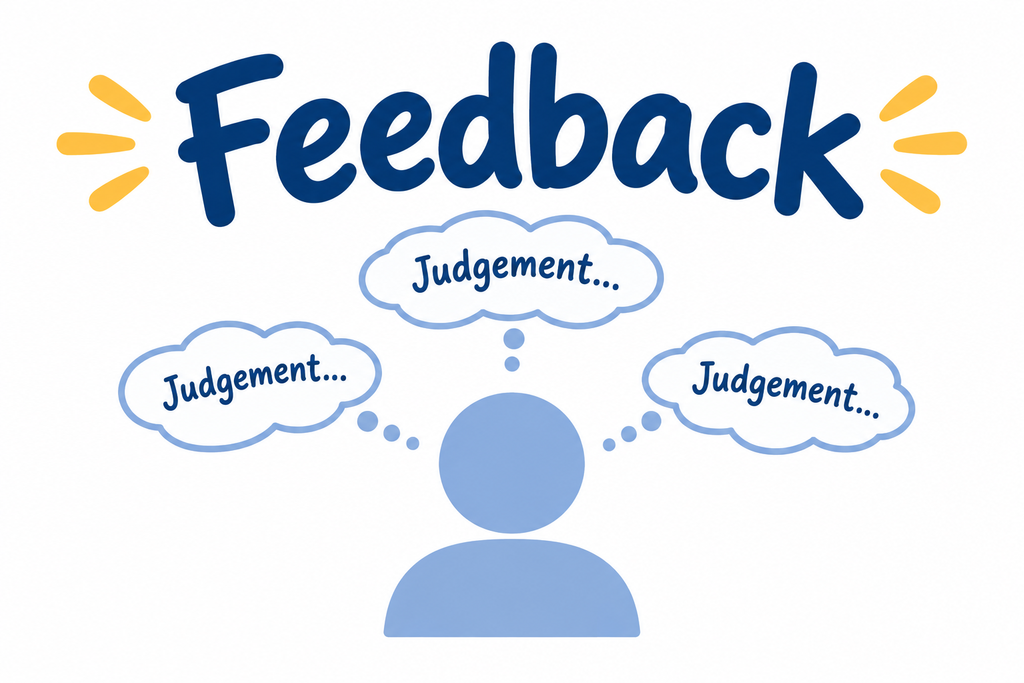
As usual, Ric started with the psychological side of things. Mentally, can we stripe away the emotions around asking, providing, and especially receiving feedback and simply consider that feedback is just “data”, and it is meant to be helpful?
There are quite a few moments I wanted to take note. The first was a question about a service provider who doesn’t take customer feedback. My first reaction would be that they don’t care. But Ric broke it down to a few possible explanations: perhaps they are not aware of the need for improvement, or perhaps they lack the resources to act on it, or perhaps they don’t care.
To me, this is a great example of keeping an open mind and not jumping to conclusions, and it’s worth exploring the possibilities before making a judgement. We also learned quite a few useful go-to phrases for asking for, providing, and responding to feedbacks.
Watch the video or take a quick peek at the slides to learn more.
September: How to be concise, when more data are needed, and how to read signs from other people

Being concise means organizing your thoughts more effectively. We can all learn to be more concise by trying the triangle formula – start with the headline, add a few ‘big picture’ details, and provide more specific details if asked.
Watch the recording and review the formula from this session, but most importantly, practice, practice, practice! Think about your main point before you speak, and when to stop as you speak.
I found this advice very useful and I plan to apply it at work: “Be thorough in your thinking. Be selective in your communication.“
June: Communicating Uncertainty with Confidence

Another lesson packed with great learnings.
First, for most people, confidence is mostly learned behaviour, shaped through our primary and secondary socialization – how we are brought up and how we are treated at school and in a society.
Then Coach Ric introduced Tony Robbins’ Confidence-Competence Cycle, which is a very useful tool for examining how confidence can be built. We can also draw confidence from related areas – even from research and knowledge.
The best lesson I got from rewatching the session is that confidence and uncertainty are separate. We can sound very confident even when circumstances are uncertain.
And finally, overall, we have to allow ourselves to fail and trust that we will be okay in the bigger picture of our lives.
Communication lessons are life lessons, after all!
May: Practice Session for Persuasion
April: Persuading Stakeholders to Support a New Idea

Ethos, Pathos, and Logos — an ancient yet timeless formula for persuasion. But Coach Ric first asked us how we feel about persuading others, and I think I understand why. Part of me still feels that if something is truly right, it should be obvious without needing persuasion. Because of that, Logos naturally feels the most comfortable to me. Logic makes sense. Facts make sense. But Coach Ric reminded us that people often buy feelings before they buy logic.
My heart agrees with him, but it will take practice for me to focus more on Ethos and Pathos instead of relying mainly on Logos. Many people in the audience felt the same way, so we decided to host a follow-up persuasion practice session next month. Check out slides and recordings of the April session.
March: Active Listening During High Pressure Meetings —How to understanding others better and respond accurately

A new beginning! As we kick off another year of the Lunch Coaching Hour on Business Communication, we’re also delighted to begin a collaboration with NCCA (National Communication Coach Association of Canada).
Our first session brought together familiar faces and new friends, filled with thoughtful insights, practical frameworks, and lots of shared laughter. Curious about the SOLER and E.A.R. formulas for body language and active listening? Feel free to check out the slides. You can also find the recording here.